

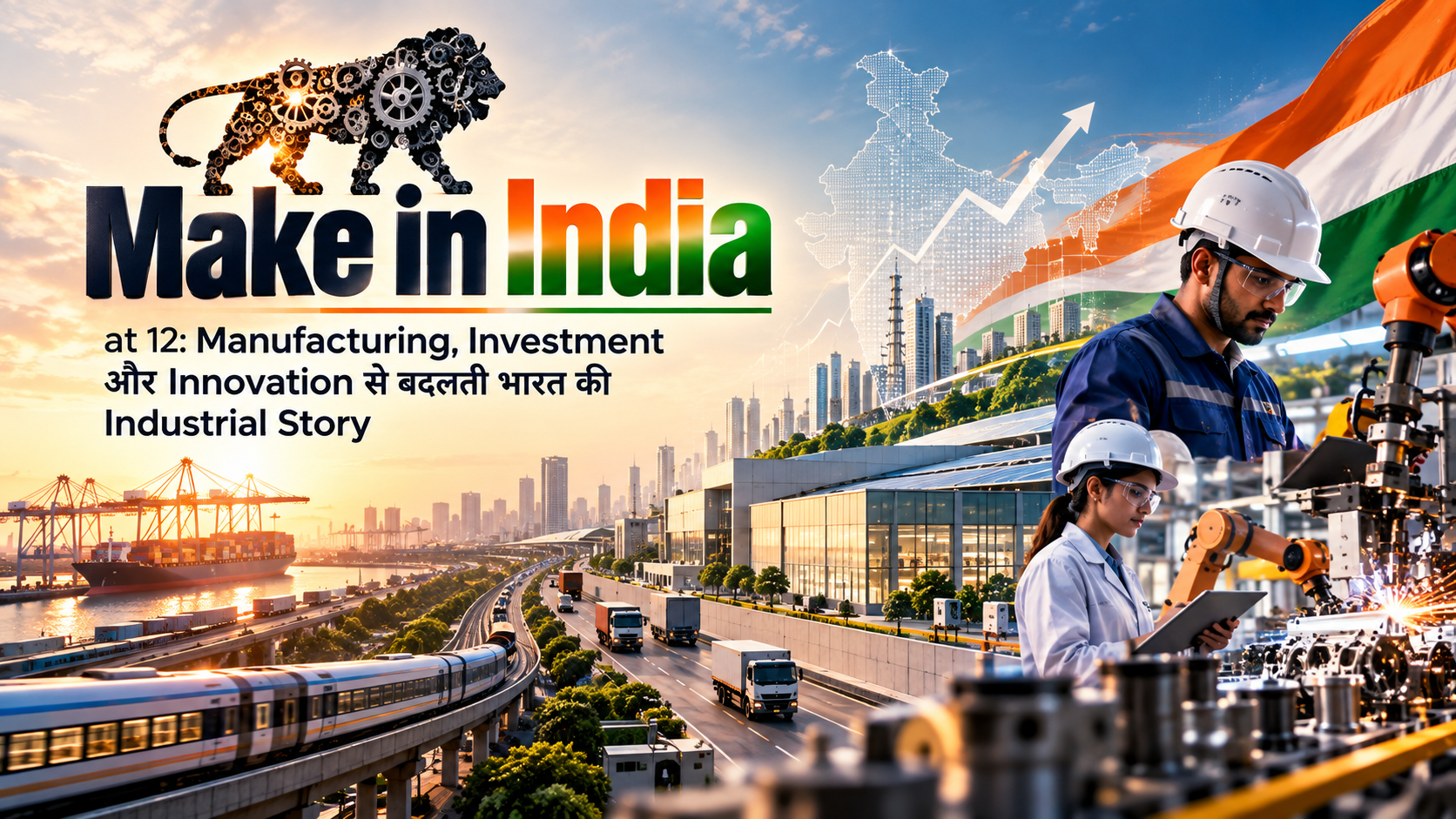
Make in India at 12: Manufacturing, Investment और Innovation से बदलती भारत की Industrial Story
भारत की industrial economy पिछले एक दशक में एक महत्वपूर्ण transformation से गुजरी है। 25 September 2026 को Make in India initiative के 12 वर्ष पूरे हुए, क्योंकि इसे 25 September 2014 को भारत को manufacturing, design और innovation का global hub बनाने के उद्देश्य से शुरू किया गया था।
12 साल बाद इस initiative को केवल एक manufacturing campaign के रूप में देखना पर्याप्त नहीं है। इसके साथ infrastructure development, investment facilitation, technology adoption, entrepreneurship और domestic production capacity जैसे कई व्यापक economic themes जुड़े हुए हैं।
सरकारी background material भी इस अवधि में manufacturing landscape में production, investment और capabilities के विस्तार को highlight करता है।
Make in India की शुरुआत क्यों हुई?
2014 में Make in India को ऐसे समय में launch किया गया था जब भारत अपनी manufacturing capabilities को मजबूत करने और global investment के लिए अधिक attractive production base बनाने की दिशा में आगे बढ़ रहा था।
इसके मूल उद्देश्य broadly जुड़े रहे:
- Manufacturing capacity बढ़ाना
- Investment को facilitate करना
- Employment opportunities को support करना
- Infrastructure improve करना
- Innovation को encourage करना
- Global supply chains में भारत की participation बढ़ाना
- Domestic industrial capabilities develop करना
समय के साथ manufacturing discussion traditional industries से आगे बढ़कर electronics, defence production, semiconductors, automobiles, renewable-energy equipment और advanced technology तक पहुंचा है।
Manufacturing से आगे बढ़ती कहानी
Make in India को केवल factories और production lines तक सीमित करके देखना industrial transformation की पूरी तस्वीर नहीं देता।
एक modern manufacturing ecosystem के लिए कई layers की आवश्यकता होती है:
Raw Materials
↓
Components
↓
Manufacturing
↓
Technology & Automation
↓
Testing & Quality
↓
Logistics
↓
Exports
↓
Global Supply Chain Integration
इसीलिए भारत के लिए manufacturing expansion के साथ infrastructure, logistics, digital systems, skilled workforce और technology capabilities का विकास भी महत्वपूर्ण है।
MSMEs की भूमिका
भारत की manufacturing story में Micro, Small and Medium Enterprises (MSMEs) की भूमिका भी महत्वपूर्ण है।
PIB के अनुसार MSMEs manufacturing, services, artisans और rural enterprises सहित विभिन्न क्षेत्रों में economic activity को support कर रहे हैं और finance, technology, skills तथा markets तक access बढ़ाने के लिए reforms और digitalisation पर जोर दिया गया है।
MSMEs की importance इसलिए भी है क्योंकि बड़े industrial projects के साथ एक व्यापक supplier ecosystem की आवश्यकता होती है।
एक automobile manufacturer, aerospace company या electronics producer के पीछे अक्सर सैकड़ों और हजारों suppliers, component manufacturers, logistics providers और service businesses जुड़े होते हैं।
Infrastructure और Industrial Growth
Manufacturing competitiveness केवल factory के भीतर तय नहीं होती।
Roads, railways, ports, airports, power supply, warehousing और digital infrastructure भी production ecosystem का हिस्सा हैं।
इसी वजह से India’s industrial development story को infrastructure development से अलग करके देखना मुश्किल है।
Faster logistics और better connectivity manufacturing companies के लिए:
- Raw-material movement
- Component transportation
- Finished-goods distribution
- Export logistics
- Supply-chain planning
को प्रभावित करते हैं।
Technology का बढ़ता महत्व
आज manufacturing का मतलब केवल ज्यादा उत्पादन करना नहीं है।
Modern industrial facilities में increasingly:
- Automation
- Artificial Intelligence
- Robotics
- Industrial IoT
- Digital twins
- Advanced analytics
- Computerised quality control
- Predictive maintenance
जैसी technologies का उपयोग हो रहा है।
इस बदलाव से manufacturing productivity और quality management के साथ workforce requirements भी बदलती हैं।
Electronics और Advanced Manufacturing
India की manufacturing ambitions अब traditional sectors तक सीमित नहीं हैं।
Electronics और semiconductor ecosystem जैसे high-technology sectors में domestic capabilities विकसित करने पर भी focus बढ़ा है।
PIB ने September 2026 में “India Building Semiconductor Future” को अपने recent backgrounder themes में शामिल किया, जो advanced manufacturing और technology ecosystem की बढ़ती relevance को दर्शाता है।
Semiconductor ecosystem में manufacturing के अलावा:
Design → Materials → Equipment → Fabrication → Packaging → Testing
जैसी interconnected capabilities की आवश्यकता होती है।
Defence Manufacturing
Defence production भी भारत की industrial strategy का एक महत्वपूर्ण हिस्सा बन चुका है।
इस क्षेत्र में domestic manufacturing बढ़ाने का उद्देश्य केवल defence equipment की local availability तक सीमित नहीं है। इसके साथ:
- Aerospace manufacturing
- Electronics
- Precision engineering
- Materials
- Components
- Maintenance
- Export capabilities
जैसे industrial segments भी जुड़े हैं।
इसका wider impact supplier ecosystem और high-value engineering capabilities पर पड़ सकता है।
Global Supply Chains में भारत
आज global companies production को अलग-अलग देशों में distribute करती हैं।
इस environment में किसी country की competitiveness कई factors पर depend करती है:
Cost
Quality
Scale
Infrastructure
Skilled Workforce
Policy Environment
Supply-Chain Reliability
भारत के लिए चुनौती केवल production capacity बनाना नहीं, बल्कि international companies के लिए एक reliable long-term manufacturing ecosystem बनाना भी है।
Investment से Industrial Capacity तक
Manufacturing investment और actual industrial capacity के बीच कई stages होती हैं।
एक announced investment को:
Announcement
↓
Land & Approvals
↓
Construction
↓
Equipment Installation
↓
Production
↓
Scale-up
में बदलना पड़ता है।
इसलिए किसी भी manufacturing initiative की progress को केवल investment announcements से नहीं, बल्कि actual production capacity, employment, exports और supplier development जैसे indicators से भी समझना जरूरी है।
India की Manufacturing Story में आगे की चुनौती
Make in India के 12 वर्षों के बाद अगला सवाल केवल यह नहीं है कि भारत में कितना उत्पादन हो रहा है।
अगले चरण में महत्वपूर्ण प्रश्न होंगे:
क्या भारत high-value manufacturing बढ़ा सकता है?
क्या domestic component ecosystems पर्याप्त scale हासिल कर सकते हैं?
क्या Indian companies global supply chains में deeper integration कर सकती हैं?
क्या manufacturing jobs के साथ high-skilled engineering jobs भी बढ़ेंगी?
क्या MSMEs बड़े industrial ecosystems के साथ effectively integrate हो पाएंगे?
क्या India innovation और product development में भी अपनी capabilities मजबूत कर पाएगा?
इन सवालों के answers आने वाले वर्षों में भारत की industrial competitiveness को shape करेंगे।
Manufacturing से “Product Nation” की ओर?
एक mature manufacturing ecosystem केवल दूसरे देशों के products assemble नहीं करता।
वह धीरे-धीरे:
Design → Engineer → Manufacture → Brand → Export
की पूरी value chain develop करता है।
भारत के लिए long-term opportunity इसी broader value chain में है।
यदि manufacturing capacity के साथ research, product design, intellectual property, advanced engineering और global distribution capabilities भी मजबूत होती हैं, तो industrial ecosystem की depth और बढ़ सकती है।
12 Years: एक पड़ाव, अंतिम लक्ष्य नहीं
Make in India के 12 वर्ष पूरे होना एक important milestone है, लेकिन manufacturing transformation एक continuous process है।
सरकार ने initiative की anniversary पर infrastructure, enterprise और innovation को economic growth के महत्वपूर्ण elements के रूप में highlight किया है।
आगे भारत की industrial story का focus केवल “Made in India” products की संख्या पर नहीं, बल्कि उनकी:
Quality + Technology + Scale + Global Competitiveness
पर भी रहेगा।
Key Highlights
- Make in India initiative 25 September 2014 को launch हुआ था।
- 25 September 2026 को इसके 12 वर्ष पूरे हुए।
- Government material manufacturing, investment और capabilities के expansion को इस journey का हिस्सा बताता है।
- MSMEs manufacturing और broader economic ecosystem में महत्वपूर्ण भूमिका निभाते हैं।
- Semiconductor और advanced technology capabilities India की current industrial-policy discussion का हिस्सा हैं।
FAQ
Make in India कब शुरू हुआ था?
Make in India को 25 September 2014 को launch किया गया था।
Make in India का मुख्य उद्देश्य क्या था?
इस initiative का उद्देश्य भारत को manufacturing, design और innovation के global hub के रूप में विकसित करने की दिशा में काम करना था।
क्या Make in India केवल manufacturing तक सीमित है?
इसकी broader industrial context में investment, infrastructure, innovation, technology और enterprise development जैसे areas भी महत्वपूर्ण हैं।
MSMEs की क्या भूमिका है?
MSMEs manufacturing, services, rural enterprises और supplier ecosystems सहित भारतीय economy के कई हिस्सों में योगदान देते हैं।
India के लिए अगला manufacturing challenge क्या है?
एक प्रमुख challenge production scale के साथ high-value manufacturing, technology, product design, components, skills और global supply-chain integration को मजबूत करना है।
Explore India’s Business, Technology & Industrial Transformation
Follow the companies, technologies, entrepreneurs, industries and business developments shaping India’s evolving economic and industrial landscape.
From Manufacturing to the Global Business Ecosystem
Explore how manufacturing, technology, entrepreneurship, enterprise solutions and industrial innovation connect across India’s evolving business landscape.
Keep Following India’s Industrial Story
Discover the latest developments across business, technology, enterprise, entrepreneurship and industry.